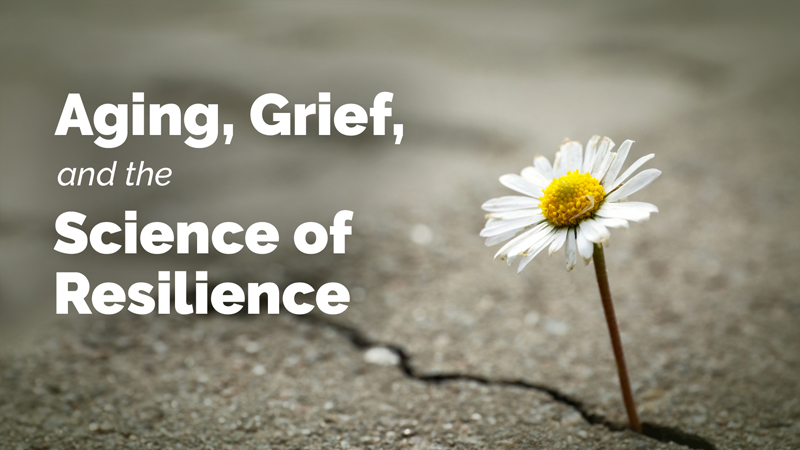
Grief is a universal experience, yet no two people experience it in quite the same way. Whether it’s the death of a loved one, the end of a meaningful relationship, or another significant loss, grief can reshape how we see ourselves and the world around us.
In this program, Danielle Glorioso, executive director of the Stein Institute for Research on Aging, brings both professional expertise and personal experience to this deeply human subject. A licensed clinical social worker and grief therapist, Glorioso examines how people navigate loss and how resilience can help them adapt.
“We’re not trying to get rid of grief,” she explains.
Instead, the goal is to understand it, manage it, and find ways to continue living meaningful lives.
Glorioso challenges the familiar idea that grief unfolds in predictable stages. The grieving process is far more complex, often involving conflicting emotions, changing relationships, and the difficult task of adjusting to a new reality. She also discusses prolonged grief, a condition in which intense suffering persists and interferes with everyday life.
But grief isn’t the whole story. Resilience plays an important role in helping people navigate life’s challenges.
“Resilience is dynamic, not fixed,” Glorioso emphasizes.
Drawing on research conducted at UC San Diego, she describes how emotional flexibility, social connections, self-compassion, and meaningful activities can strengthen resilience over time. She also shares findings from a program designed to help older adults develop these skills.
Her message is reassuring: healing doesn’t require forgetting those we’ve lost. Grief and personal growth can coexist, allowing us to carry cherished memories while finding renewed purpose and connection.
Watch: Aging, Grief, and the Science of Resilience on UCTV to hear Glorioso share her insights.