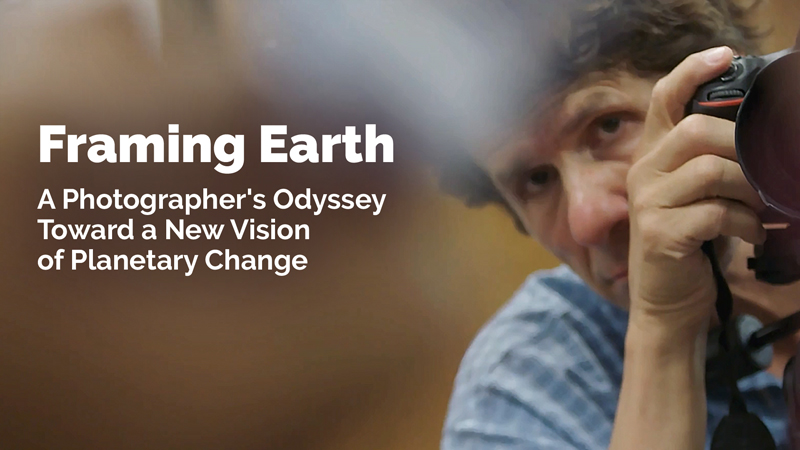
How do you photograph something as vast and gradual as planetary change? For James Balog, the answer begins with looking beyond a beautiful landscape to the forces reshaping it. In the 2026 Keeling Memorial Lecture, the environmental photographer and founder of Earth Vision Institute reflects on more than four decades of documenting the relationship between people and nature.
The lecture honors Charles David Keeling, whose precise measurements revealed rising atmospheric carbon dioxide and produced the Keeling Curve. Balog connects that scientific legacy to his own effort to make environmental change visible. His images take viewers from towering California trees and altered landscapes to wildfire zones and the unexpectedly thin layer of air surrounding Earth. A camera carried high above the ground by a weather balloon offers a striking reminder of how limited that atmosphere really is.
Perhaps his clearest example is the Extreme Ice Survey. To capture a process that a single photograph couldn’t show, Balog and his team installed time-lapse cameras near glaciers, documenting their movement and retreat over time.
“It’s not hypothetical. It’s not a computer model. It’s not a graph. It’s not a projection. It’s real-world evidence,” he explains as the unfolding images tell a story.
The photographs are beautiful, but Balog doesn’t shy away from what they reveal. Still, his closing message rejects hopelessness.
“Despair accomplishes nothing.”
Instead, he asks audiences to consider how observation, understanding, and action can shape our relationship with the planet.
Watch: Framing Earth: A Photographer’s Odyssey Toward a New Vision of Planetary Change — 2026 Keeling Memorial Lecture on UCTV.
More from the Birch Aquarium and UCTV.