-
Bill McKibben on Facing Climate Change Without Giving Up

In this program, environmentalist and author Bill McKibben does not soften the reality of climate change. “Look, the things that we warned about in the 1980s, they’ve all pretty much happened now. We’ve watched the climate crisis play out more or less as we thought it would, in fact, a little faster and a little…
-
Kyoto Prize: Three Laureates, Three Ways of Expanding Human Knowledge

The Kyoto Prize Symposium features three laureates whose work spans ethics, life sciences, and information technology. Across very different fields, the laureates highlight research that reshapes how we understand human behavior, biological development, and intelligent systems. As Dr. Kazuo Inamori, founder of the Kyoto Prize, puts it: “A human being has no higher calling than…
-
What Judy Woodruff Hears Beyond Washington

Journalist Judy Woodruff has spent decades covering American politics. Known for her calm, balanced reporting, Woodruff has covered every U.S. presidential election since 1976, served as anchor and managing editor of the PBS NewsHour through the end of 2022. It’s clear that what still drives Woodruff is her curiosity about people. After stepping away from…
-
Three Ages, Three Ways of Thinking

What can children teach us about artificial intelligence, and what can AI teach us about human development? When people talk about AI, it’s easy to slip into the idea that “intelligence” is one thing you either have a lot of or a little of. Alison Gopnik (UC Berkeley) argues that there isn’t one single, all-purpose…
-
Poetry That Sounds Like Life: Humor, Voice, and Access
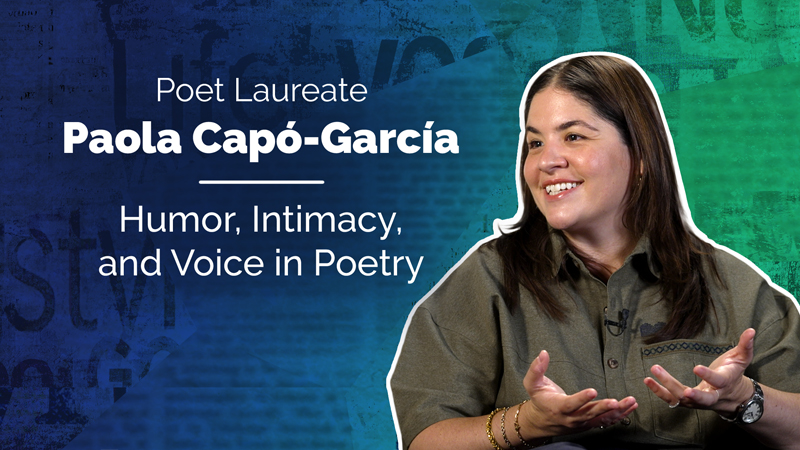
Poetry becomes more approachable when it reflects everyday language, humor, and lived experience. San Diego’s Poet Laureate, Paola Capó-García, emphasizes that humor belongs in poems, calling it a “visceral feeling,” and notes that it is not always treated as part of poetry in classrooms or conversations. She wants people to talk about a poem the…
-
How Espiritismo Carries Memory Across Generations

Espiritismo traces its roots to the sacred knowledge of West and Central African peoples, carried into the Americas by enslaved ancestors between the 15th and 19th centuries. Marta Moreno Vega, Ph.D., a scholar and co-founder of Corredor Afro, explores those roots and the traditions sustained from them. Moreno Vega follows Espiritismo across a wide geography:…
-
Surviving Incivility: A BAM Guide to Rude People

If you feel like rudeness is everywhere, you are not imagining it. In this Osher Author Talk, host Henry DeVries interviews John O’Brien, psychologist and author of “Rudeness Rehab,” who describes a pandemic of incivility. O’Brien points to bad behavior cropping up across daily life, from workplace dynamics to public spaces and even clinical settings.…
-
Academia Meets the Underworld with Novelist R.F. Kuang

R.F. (Rebecca) Kuang’s appearance on the Writer’s Symposium stage in September drew huge applause from a packed auditorium filled with fans of her (mostly) fantasy novels. Author of The Poppy War and Babel, Kuang blends sharp social critique with rich storytelling, exploring power, politics, and the human cost of ambition. Katabasis, her newest novel, is…
-
The Story of Alice McGrath’s Fight for Justice
In 1942, the Sleepy Lagoon case became one of the most racially charged trials in U.S. history. Twenty-two Mexican American youths—mostly teenagers, many just 17—were tried together for the death of José Díaz, even though no witness placed them at the scene and the cause of death was never proven. A biased judge and jury…
-
Rescuing Japan’s 1930s Paper Films: A Hidden Home-Cinema History Preserved

Japanese paper films are a rare, little-known home-cinema format made in the 1930s by three main manufacturers—two in Tokyo and one in Osaka. The films are short (often one to four minutes), and typically come in a 27mm gauge with perforations at the top and bottom of each frame. Unlike standard film, the back surface…